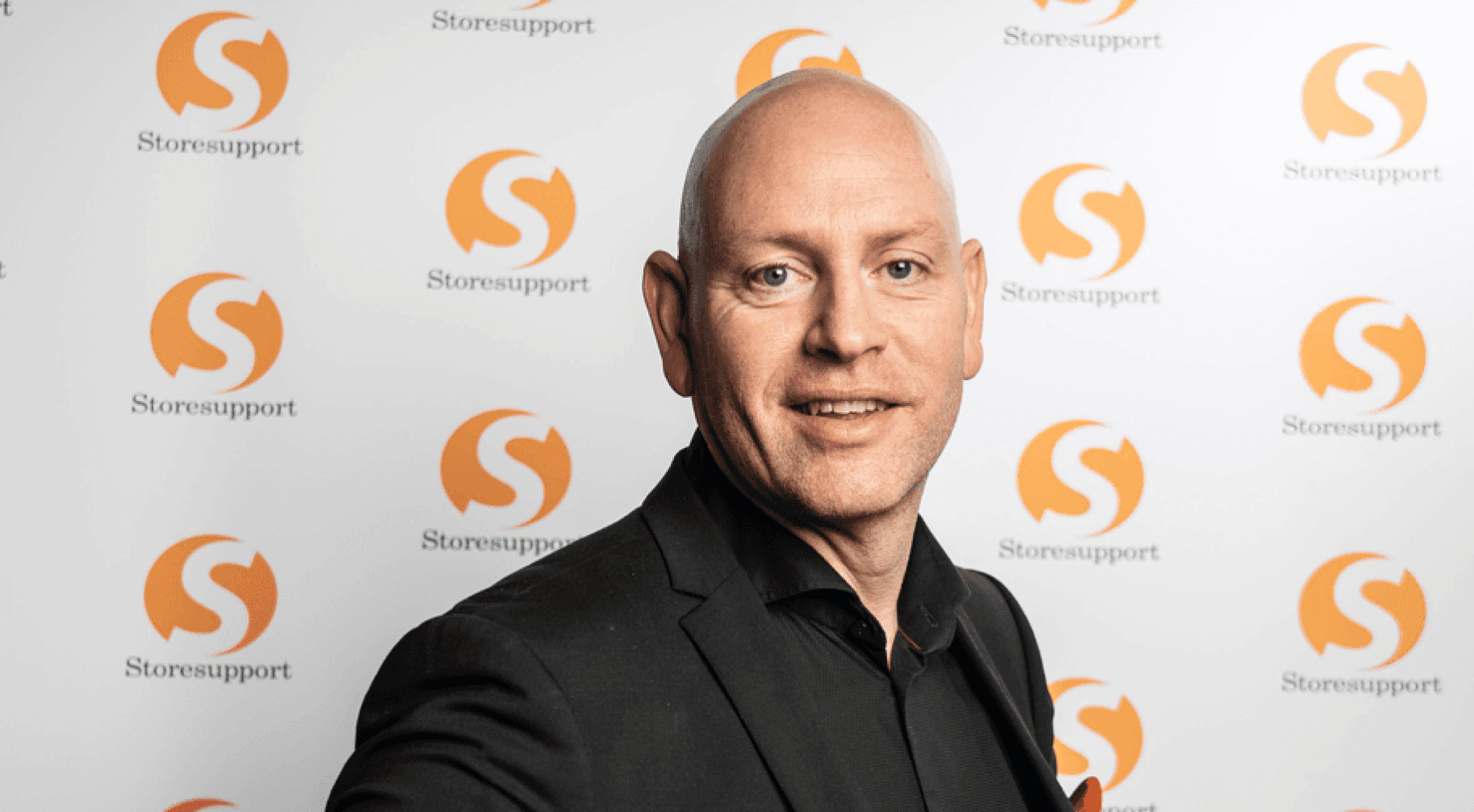
Peter Erikson, CEO of Storesupport, took a comprehensive approach to health initiatives and in just one year the company’s health improved significantly. “If employees feel good, they will perform better, which develops the company,” he says.
The service company Storesupport is one of those that has used Wellr to improve employee health. They began their internal health work among the 60 white-collar employees in the organization by carrying out an evaluation using Wellr’s digital service. It then became clear that they had three focus areas that needed improvement: the categories pain and injuries, ergonomics, and physical activity level. Based on these insights, Storesupport set up a joint action plan to create long-term change. The measures included offering height-adjustable desks and challenging each other internally to increase everyday physical activity. In addition, every employee received their own health profile with measures tailored specifically to them.
Taking a 30-minute walk, leaving the car at home, and taking the stairs instead of the elevator were some of the activities to be tested internally. Colleagues also started joint competitions with the help of Wellr. A step challenge with the goal of walking from Stockholm to Paris and a competition to stand up and work for a number of weeks are two examples. It has now been about a year since the first measurement, and it is time to evaluate the results.
Together, the colleagues at Storesupport have made enormous progress in their three focus areas, which has led to improved health in the company as a whole. The total activity level increased by 7 percent and the number of people in various risk groups decreased by 10 percent. In the pain and injuries category, the risk group decreased by as much as 11 percent, and ergonomics improved by 5 percent.
“We are very pleased with the progress that has been made, but we see it only as a step along the way. The first year was a test year – now we are setting a plan to increase engagement with these issues among all leaders,” says Peter Erikson.
He wants to create a culture where it is completely natural to ask the question, “What does your health wheel look like?” That requires insights and knowledge, and above all commitment, but Peter Erikson is convinced that investing in making sure all employees thrive and feel good is necessary if they are to continue developing the company.