
Stress is a part of life – we are all exposed to it in one way or another. But to prevent it from leading to various stress symptoms, it’s important to find a good balance between strain and recovery. Here are some things you can do to avoid burning out.
Stress in itself is actually a good thing – it’s a defense mechanism that is necessary to cope with external pressures, develop, and improve your performance. It’s not dangerous to have a stressful period for a while, but your body needs time to recover. Long-term stress can be harmful and cause changes in both the brain and the body’s various organ systems. To be able to prevent and manage stress, it’s important to understand how stress works. It can be divided into three different phases:
• Acute stress
Acute stress is a reaction that short-term maximizes your chances of surviving a potential threat or challenge. When the stressful situation is over, the body quickly returns to its normal state.
• Long-term stress
With prolonged stress without sufficient recovery, the body’s systems can become dysregulated. Long-term stress leads to increased production of stress hormones, which among other things negatively affects recovery and sleep. You may experience symptoms such as increased fatigue, bodily pain, and sensitivity to sound and light.
• Exhaustion/burnout
Exhaustion is characterized by a marked lack of energy, sleep disturbances, and difficulties with concentration and memory. The exhaustion affects you physically as well as emotionally and cognitively. Chronic stress can lead to measurable changes in the brain and hormonal imbalances.
Five key points to avoid burnout
• Diet
People with good nutritional intake tolerate stress better. A balanced diet creates healthy energy, stamina, and strength, and is a prerequisite for good recovery. During periods of high stress, it can be beneficial to add various vitamins and minerals – such as magnesium, calcium, zinc, and vitamins B, C, and E – to your diet, and to avoid fast carbohydrates.
• Physical activity
Regular physical activity and exercise help the body process stress hormones more effectively, which in turn helps you handle stress better. When you exercise, neurotransmitters are released in the brain that counteract depression and pain. Memory, learning, problem-solving, and concentration also improve – provided that the physical activity is moderate. Too much exercise or too high intensity can instead become a stress factor that breaks the body down and weakens the immune system.
• Social interaction
Human beings are social creatures with a fundamental need for good and close relationships. Spending time with family and friends makes it easier to unwind and feel joy. Good relationships also help you feel more secure and better able to handle stress.
• Sleep
Sleep is perhaps the single most important factor in counteracting the negative effects of stress. Most people need eight hours of sleep per night to be fully recovered. This fact may itself contribute to even more stress – since one symptom of stress is precisely difficulty sleeping. But there are strategies you can use: make sure to start winding down well before bedtime, preferably without your phone, computer, or other screens. Take a bath or read a book instead. Keep the bedroom dark and cool. Also avoid stimulants such as nicotine, caffeine, and alcohol well before going to bed, as these substances impair your sleep quality.
• Ability to gain perspective
The ability to gain perspective means that you actively and consciously use your values when making different priorities. Zoom out and look at the big picture, and think about what you really want. Choose actively – and choose things away. Answer the following questions: What is important to me? How do I want to use my short time on earth? What does quality of life mean to me? If you make an honest attempt to answer these questions, you will gain a better perspective on your life. This is crucial to avoid getting stressed out unnecessarily. It can be helpful to start the day by planning for your well-being. Go through all the pleasant things that will happen, what you want to do to add one more stimulating activity, and when during the day you will set aside a little time just for yourself.
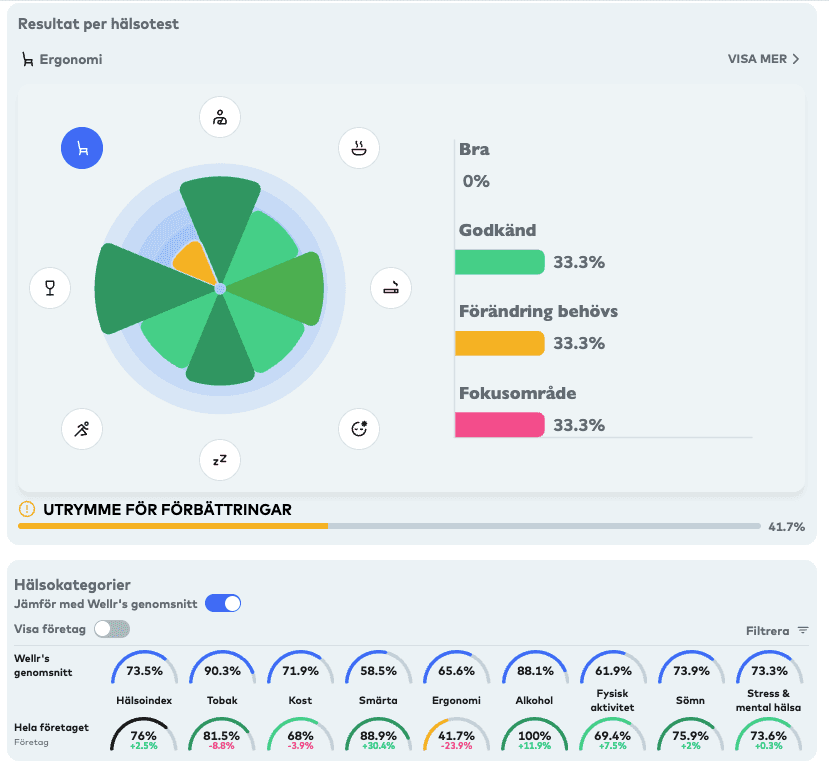
The solution to avoiding the negative effects of stress is often to find a balance in everyday life between what drains your energy and what replenishes it. In the Wellr health system, for example, we use a health wheel to clearly visualize which elements are consuming your energy. If you don’t use Wellr at your workplace, you can draw your own health wheel. Start with the points we’ve mentioned above and try to assess in which areas you could create an improvement.